
Most travellers need a visitor visa to travel to Canada. You may also need one if you’re transiting through a Canadian airport on your way to your final destination.
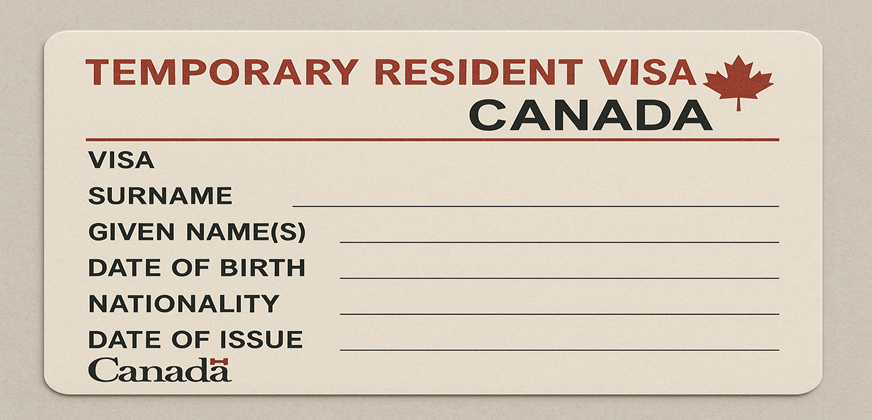
A visitor visa (also called a temporary resident visa) is an official document that we put in your passport. It shows that you meet the requirements needed to travel to Canada.
A visa officer has discretion to issue you a single-entry visa or multiple entry visa, and decide how long it will be valid for. Generally, a visitor visa may be valid for up to a maximum of 10 years, or until the expiry of either your passport or biometrics, whichever comes first.
Most visitors can stay for up to 6 months in Canada.
At the port of entry, the border services officer may allow you to stay for less or more than 6 months. If that’s the case, they’ll put the date you need to leave by in your passport. They might also give you a document, called a visitor record, which will show the date you need to leave by.
If you do not get a stamp in your passport, you can stay for 6 months from the day you entered Canada or until the expiry of your biometrics or your passport expires, whichever comes first. Super visa holders who enter Canada after June 22, 2023 can stay for 5 years. If you need a stamp, you can ask a border services officer for one. If you arrive at an airport that uses primary inspection kiosks, you may ask the border services officer for a stamp after you finish at the kiosk.
You must meet some basic requirements to get a visitor visa.
You must:
1. have a valid travel document, like a passport
2. be in good health
3. have no criminal or immigration-related convictions
4. convince an immigration officer that you have ties—such as a job, home, financial assets or family—that will take you back to your home country
5. convince an immigration officer that you will leave Canada at the end of your visit
6. have enough money for your stay
* The amount of money you will need depends on how long you will stay and if you will stay in a hotel, or with friends or relatives.
You may also need a medical exam and letter of invitation from someone who lives in Canada.
Some people are inadmissible to Canada, which means they are not allowed to enter the country. You can be inadmissible for several reasons, including being involved in:
1. criminal activity
2. human rights violations
3. organized crime
Book your biometrics collection appointment as soon as you can to avoid processing delays.
Find out how to give biometrics
Processing your visitor visa application
We’ll check your application to make sure you have all the documents you need.
If it's incomplete, your application may be refused.
We may also ask you to
1. go to an interview with our officials in your country
2. send more information
3. get a medical exam
4. get a police certificate
We’ll tell you what to do if you need to do any of these.
We process most applications in a few weeks or less. Processing times depend on the visa office and if you need to do any extra steps (listed above).
Check your application status
The way to check your application status depends on how you applied. Find out how to check your application status.
Documents you need before you travel to Canada
In some situations, you’ll need to bring documents with you when you travel to Canada.
Situations where you may need extra documents on arrival
If either of the following situations applies to you or someone you’ll travel with, have the documents indicated in hand.
You have a child under the age of 18 (a minor child)
In Canada, a child under the age of 18 is considered a minor.
You may need to show
1. a letter that authorizes the minor child to travel to Canada, and
2. other documents, such as adoption papers or a custody decree, depending on if the minor child travels alone or not
Find out more about minor children travelling to Canada
You were invited to come to Canada
If you got a letter from a person or company that invited you to Canada, bring that letter with you. A border services officer may ask to see it.
Find out more about letters of invitation
Your arrival in Canada
A valid visa and travel document don’t guarantee that you can enter Canada.
We determine if you meet all entry requirements
When you arrive, we’ll check your identity to make sure that you’re the same person who was approved to travel to Canada.
If you enter Canada at one of 4 major Canadian airports
1. Your fingerprints will be checked automatically at a primary inspection kiosk.
2. The system will check your identity against the information collected when your application was submitted.
If you enter Canada at a land port of entry
1. Your fingerprints may be checked if we refer you to a secondary inspection, where a border services officer will use a fingerprint verification device to check your fingerprints.
If you pass the identity check, health assessment, and meet the entry requirements, the border services officer may stamp your passport or let you know how long you can stay in Canada. You’re normally allowed to stay in Canada for up to 6 months.
In some cases, the officer may limit or extend your time in Canada, depending on the purpose of your visit. Ask questions if you’re not sure about something.
You won’t be allowed into Canada if you give false or incomplete information. The officer must be convinced that
1. you’re eligible for entry into Canada
2. you’ll leave Canada at the end of your approved length of stay